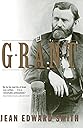
Grant
Product ID: 1610352
Desertcart purchases this item on your behalf and handles shipping, customs, and support to Bermuda.
desertcart.com: Grant: 9780684849270: Smith, Jean Edward: Books Review: Superb Account of an Historic Leader - Ulysses S. Grant: A remarkable general, yet a mediocre politician. That was my understanding, as a pseudo-historian enthusiast, until I came upon author Jean Edward Smith's extensive study in GRANT. Smith begs to differ with this consensus, and argues that Grant, as General and Commander-in-Chief, looked back on his years of failure to find strength and tenacity to be a moral and exceptional leader--weaknesses not withstanding. Smith highlights Grant's overwhelming calm demeanor--when those about him were succumbing to their emotions--that led to his success on the battlefield, and in the White House. Smith gives an account of General Grant calmly issuing new orders while rebel shells were literally bursting all around him; it's a microcosm of Grant's ability to focus, and his tenacity to persevere. In Smith's biography, GRANT covers the general's full life--from a youngster in Ohio to a mediocre cadet at West Point. Grant got his first taste of combat as a lieutenant in the Mexican War; Smith reveals how the young officer very much admired the commanders Winfield Scott and Zachary Taylor--fearless leaders who never lost their demeanor or resolve in the face of tenacious adversity. These were the traits that defined him as general-in-chief during the Civil War. Yet GRANT also covers the general's dark years, suggesting he was forced to resign his commission as captain in the 1850s due to his drinking, subsequently sinking into poverty as a failed farmer, and forced to sell firewood on a street corner in St. Louis. It was a constant fear of returning to such straits that compelled the general to fiercely succeed. Almost overlooked to be commissioned as an officer as the Civil War began, Grant rapidly gained notoriety on the Western frontier. As President Lincoln proclaimed, "This is a general who fights!" Smith steadily portrays Grant's battlefield acumen, his rigid determination, his calm demeanor, his ability to determine the strengths of his army and to exploit them. Even in the face of adversity, Grant stayed the course; it led to victories at Shiloh, Vicksburg, and Chattanooga, prompting Lincoln to promote him to general-in-chief of the entire Union army and bring him to Washington to take command of the hapless Army of the Potomac. Grant took his forces into Virginia, and when adversity struck--unlike previous commanders who went back north across the Potomac--Grant dug in. After all, as Smith suggests, the general had superior numbers, so it was a matter of sheer attrition to outlast Robert E. Lee's embattled Confederate Army. Such tenacity ultimately led to Lee's surrender at Appomattox; when the war ended, Grant was an undisputed national hero. Following Lincoln's assassination, Grant continued as general-in-chief during Andrew Johnson's tumultuous presidency; Smith suggests it was Grant's machinations behind the scenes that prohibited Johnson from undoing Reconstruction. In 1868, with Grant not even wanting a political career, the general was unanimously nominated the Republican candidate for president; Grant subsequently won in a landslide. Again, Smith reveals how Grant brought the same calm demeanor to the White House; it helped him in his first year, when corrupt speculators flooded the market with gold and caused a financial panic, to defy congressional and media demands to flood the economy with greenbacks, easing the economy back on the gold standard. Grant also stringently enforced Reconstruction and sent in armed forces to repel the KKK; he also advocated peace on the Plains. He tried (ultimately without success) to drive all the corruption out of the Bureau of Indian Affairs, yet he was able to establish a fragile peace within the various reservations. Still a nationwide phenom, Grant was reelected in 1872, on another landslide. Smith reaches a harsher note when he describes the general's second term. Grant had a weakness for giving the benefit of the doubt to those who showed kindness to him; as a result, he picked less then stellar men to fill cabinet positions for his second term. As Smith relates, one by one these scoundrels fell into scandal; these subsequent scandals overshadowed Grant's second term--and did massive harm to Reconstruction in the south. Smith also examines how Grant's calm resolve helped keep hotheads from taking to the streets in the wake of the 1876 election--he refused to favor Democrats or Republicans, but pushed for a bipartisan solution to resolve the disputed election; it was a bizarre turn of events on the Supreme Court that ultimately tipped the scales in favor of Rutherford B. Hayes. And in March of 1877, Ulysses S. Grant becomes a private citizen. Now in the final chapter of the general's life, Smith shows the Grant family touring the world for two solid years; Grant was an international sensation in Europe and Asia. (Smith shows ample evidence that Japan was by far the general's favorite country.) Donors and boosters raised money for Grant and his wife, Julia, to purchase a brownstone in New York--plus said funds allowed for the Grants to live comfortably. Unfortunately, Grant continued to make bad business decisions--as he had done in the 1850s--and he lost all his money investing in a house of cards scheme his son, Buck, had established. Fortunately, various friends stepped in to "loan" Grant sufficient funds to get by, allowing the general--now in the clutches of cancer--to write and complete his memoirs. Mark Twain himself was going to publish them, and the royalties generated would serve as insurance for Julia and Grant's children. Grant finished his memoirs literally days before his death in July of 1885; Smith relates how Twain was proud to present the first royalty check to Julia in the amount of $200,000: at the time, the largest royalty check ever written. Absolutely unknown to this reviewer: Grant was a candidate for a third presidential term in 1880. He fell short by just a handful of votes to get the nomination on the first ballot, throwing the Republican convention into subsequent chaos, culminating in the eventual nomination of James Garfield. Also unknown: on the final day of Congress in 1885--as Chester Arthur was leaving office at noon, and Grover Cleveland was about to be sworn in as president--the House and Senate passed a resolution restoring Grant's rank as general, thereby providing a lifelong pension. As Smith relates, the general was a beloved national hero, long after his military and political careers. Smith's prose is direct and to the point. His narrative flows smoothly, and is easy to assimilate. There are thousands of footnotes, relayed at the back of the text, along with a bibliography over 40 pages long; clearly Smith has done his homework. Ulysses S. Grant was an exceptional commander, politician, and man; Jean Edward Smith's GRANT is an exceptional biography. Enthusiastically recommended. ~D. Mikels, Esq. Review: Ulysses Grant Shines Under New Light - Jean E. Smith's biography delivers a long overdue, refreshing and considerable recast of Ulysses Grant, especially the post-War years. While sustaining his reputation as an accomplished military leader, Smith's Grant emerges as a politician and stateman of considerable acumen and accomplishment. Rather than present Grant as a successful soldier and failed politician, Smith emphasizes the continuity in Grant's life. The common thread is an indomitable strength of character. Throughout you meet a man of quiet, resolute determination and honesty. The early chapters focus on Grant's experience at West Point, in the Mexican War, military outposts, and in his many varied and often failed commercial ventures. Throughout these early ups and downs, what emerges is the picture of a man of absolute integrity and humility... a man unwilling to solicit position or accept patronage, unfailing in his payment of peronsal or financial debt, and unflinching in his duty. Not unexpectedly half the book addresses Grant's military service; most of the accounts are familiar. Smith, however, goes to considerable length to discuss Grant's relationships with subordinate and opposition leaders (e.g., Simon Bolivar Buckner, Sherman, Longstreet, Thomas). The author points to the Federal movements at Vicksburg (1863) and James River (1865) as among Grant's most inspired, while bringing perspective to the momentum gained and lives lost during the campaign of 1864 (e.g., Wilderness, Spotsylvania, Cold Harbor). Sometimes labeled a butcher, Grant's casualty ratio was consistently less than Robert E. Lee's and, unlike preceding Eastern commanders, Grant refused to pay for the same ground twice, choosing to defeat the Confederate Army rather than focus on "geographical trophies." While the sterotype of the Grant White House is one of corruption, graft and patronage, the book reveals Grant's efforts to avoid or alleviate all. After supporting Lincoln's intent for the South during a true failure -- the Andrew Johnson years (1865-1968) -- Grant makes notable contributions as President. Against a backdrop of residual post-war division, Grant supports the civil rights of freedmen in Reconstruction and of Native Americans in the West. Despite legislative resistance he outlined model civil service reform to prevent rampant patronage. Internationally Grant and his outstanding Secretary of State, Hamilton Fish, oversaw successful treaties governing future relations in the Carribean and enduring peace with England, Through timely, adept and honest maneuvering Grant vetoed the 1874 "inflation bill" and oversaw passage of the Resumption Act establishing sound monetary policy and placing the country on a strong economic footing. Destruction of the Whiskey Ring affirmed fair taxation and removed corrupt officials of both parties. Grant also addressed and sustained separation of church and state. The book is easily read and balanced in its treatment. Smith discusses the motivations of Grant's occasional "benders," and allows that the General was often too trusting of his friends, many of whom hoped to profit by their association with the great man. Thoughout, however, Grant's honor, motivations and intentions emerge unstained. Jean Smith's book is well researched (ample footnotes, a 38 page bibliography, and 78 pages of citations and endnotes), the only complaint being that many are from eminent but secondary resources. I whole heartedly recommend "Grant" to the general reader, Civil War historian, and politically curious. As I did, you will come away impressed with a Ulysses Grant few have troubled to know well.
| Best Sellers Rank | #317,010 in Books ( See Top 100 in Books ) #112 in American Civil War Biographies (Books) #222 in U.S. Civil War History #275 in US Presidents |
| Customer Reviews | 4.7 4.7 out of 5 stars (786) |
| Dimensions | 6.13 x 1.4 x 9.25 inches |
| Edition | Illustrated |
| ISBN-10 | 0684849275 |
| ISBN-13 | 978-0684849270 |
| Item Weight | 1.95 pounds |
| Language | English |
| Print length | 784 pages |
| Publication date | April 9, 2002 |
| Publisher | Simon & Schuster |
D**S
Superb Account of an Historic Leader
Ulysses S. Grant: A remarkable general, yet a mediocre politician. That was my understanding, as a pseudo-historian enthusiast, until I came upon author Jean Edward Smith's extensive study in GRANT. Smith begs to differ with this consensus, and argues that Grant, as General and Commander-in-Chief, looked back on his years of failure to find strength and tenacity to be a moral and exceptional leader--weaknesses not withstanding. Smith highlights Grant's overwhelming calm demeanor--when those about him were succumbing to their emotions--that led to his success on the battlefield, and in the White House. Smith gives an account of General Grant calmly issuing new orders while rebel shells were literally bursting all around him; it's a microcosm of Grant's ability to focus, and his tenacity to persevere. In Smith's biography, GRANT covers the general's full life--from a youngster in Ohio to a mediocre cadet at West Point. Grant got his first taste of combat as a lieutenant in the Mexican War; Smith reveals how the young officer very much admired the commanders Winfield Scott and Zachary Taylor--fearless leaders who never lost their demeanor or resolve in the face of tenacious adversity. These were the traits that defined him as general-in-chief during the Civil War. Yet GRANT also covers the general's dark years, suggesting he was forced to resign his commission as captain in the 1850s due to his drinking, subsequently sinking into poverty as a failed farmer, and forced to sell firewood on a street corner in St. Louis. It was a constant fear of returning to such straits that compelled the general to fiercely succeed. Almost overlooked to be commissioned as an officer as the Civil War began, Grant rapidly gained notoriety on the Western frontier. As President Lincoln proclaimed, "This is a general who fights!" Smith steadily portrays Grant's battlefield acumen, his rigid determination, his calm demeanor, his ability to determine the strengths of his army and to exploit them. Even in the face of adversity, Grant stayed the course; it led to victories at Shiloh, Vicksburg, and Chattanooga, prompting Lincoln to promote him to general-in-chief of the entire Union army and bring him to Washington to take command of the hapless Army of the Potomac. Grant took his forces into Virginia, and when adversity struck--unlike previous commanders who went back north across the Potomac--Grant dug in. After all, as Smith suggests, the general had superior numbers, so it was a matter of sheer attrition to outlast Robert E. Lee's embattled Confederate Army. Such tenacity ultimately led to Lee's surrender at Appomattox; when the war ended, Grant was an undisputed national hero. Following Lincoln's assassination, Grant continued as general-in-chief during Andrew Johnson's tumultuous presidency; Smith suggests it was Grant's machinations behind the scenes that prohibited Johnson from undoing Reconstruction. In 1868, with Grant not even wanting a political career, the general was unanimously nominated the Republican candidate for president; Grant subsequently won in a landslide. Again, Smith reveals how Grant brought the same calm demeanor to the White House; it helped him in his first year, when corrupt speculators flooded the market with gold and caused a financial panic, to defy congressional and media demands to flood the economy with greenbacks, easing the economy back on the gold standard. Grant also stringently enforced Reconstruction and sent in armed forces to repel the KKK; he also advocated peace on the Plains. He tried (ultimately without success) to drive all the corruption out of the Bureau of Indian Affairs, yet he was able to establish a fragile peace within the various reservations. Still a nationwide phenom, Grant was reelected in 1872, on another landslide. Smith reaches a harsher note when he describes the general's second term. Grant had a weakness for giving the benefit of the doubt to those who showed kindness to him; as a result, he picked less then stellar men to fill cabinet positions for his second term. As Smith relates, one by one these scoundrels fell into scandal; these subsequent scandals overshadowed Grant's second term--and did massive harm to Reconstruction in the south. Smith also examines how Grant's calm resolve helped keep hotheads from taking to the streets in the wake of the 1876 election--he refused to favor Democrats or Republicans, but pushed for a bipartisan solution to resolve the disputed election; it was a bizarre turn of events on the Supreme Court that ultimately tipped the scales in favor of Rutherford B. Hayes. And in March of 1877, Ulysses S. Grant becomes a private citizen. Now in the final chapter of the general's life, Smith shows the Grant family touring the world for two solid years; Grant was an international sensation in Europe and Asia. (Smith shows ample evidence that Japan was by far the general's favorite country.) Donors and boosters raised money for Grant and his wife, Julia, to purchase a brownstone in New York--plus said funds allowed for the Grants to live comfortably. Unfortunately, Grant continued to make bad business decisions--as he had done in the 1850s--and he lost all his money investing in a house of cards scheme his son, Buck, had established. Fortunately, various friends stepped in to "loan" Grant sufficient funds to get by, allowing the general--now in the clutches of cancer--to write and complete his memoirs. Mark Twain himself was going to publish them, and the royalties generated would serve as insurance for Julia and Grant's children. Grant finished his memoirs literally days before his death in July of 1885; Smith relates how Twain was proud to present the first royalty check to Julia in the amount of $200,000: at the time, the largest royalty check ever written. Absolutely unknown to this reviewer: Grant was a candidate for a third presidential term in 1880. He fell short by just a handful of votes to get the nomination on the first ballot, throwing the Republican convention into subsequent chaos, culminating in the eventual nomination of James Garfield. Also unknown: on the final day of Congress in 1885--as Chester Arthur was leaving office at noon, and Grover Cleveland was about to be sworn in as president--the House and Senate passed a resolution restoring Grant's rank as general, thereby providing a lifelong pension. As Smith relates, the general was a beloved national hero, long after his military and political careers. Smith's prose is direct and to the point. His narrative flows smoothly, and is easy to assimilate. There are thousands of footnotes, relayed at the back of the text, along with a bibliography over 40 pages long; clearly Smith has done his homework. Ulysses S. Grant was an exceptional commander, politician, and man; Jean Edward Smith's GRANT is an exceptional biography. Enthusiastically recommended. ~D. Mikels, Esq.
D**T
Ulysses Grant Shines Under New Light
Jean E. Smith's biography delivers a long overdue, refreshing and considerable recast of Ulysses Grant, especially the post-War years. While sustaining his reputation as an accomplished military leader, Smith's Grant emerges as a politician and stateman of considerable acumen and accomplishment. Rather than present Grant as a successful soldier and failed politician, Smith emphasizes the continuity in Grant's life. The common thread is an indomitable strength of character. Throughout you meet a man of quiet, resolute determination and honesty. The early chapters focus on Grant's experience at West Point, in the Mexican War, military outposts, and in his many varied and often failed commercial ventures. Throughout these early ups and downs, what emerges is the picture of a man of absolute integrity and humility... a man unwilling to solicit position or accept patronage, unfailing in his payment of peronsal or financial debt, and unflinching in his duty. Not unexpectedly half the book addresses Grant's military service; most of the accounts are familiar. Smith, however, goes to considerable length to discuss Grant's relationships with subordinate and opposition leaders (e.g., Simon Bolivar Buckner, Sherman, Longstreet, Thomas). The author points to the Federal movements at Vicksburg (1863) and James River (1865) as among Grant's most inspired, while bringing perspective to the momentum gained and lives lost during the campaign of 1864 (e.g., Wilderness, Spotsylvania, Cold Harbor). Sometimes labeled a butcher, Grant's casualty ratio was consistently less than Robert E. Lee's and, unlike preceding Eastern commanders, Grant refused to pay for the same ground twice, choosing to defeat the Confederate Army rather than focus on "geographical trophies." While the sterotype of the Grant White House is one of corruption, graft and patronage, the book reveals Grant's efforts to avoid or alleviate all. After supporting Lincoln's intent for the South during a true failure -- the Andrew Johnson years (1865-1968) -- Grant makes notable contributions as President. Against a backdrop of residual post-war division, Grant supports the civil rights of freedmen in Reconstruction and of Native Americans in the West. Despite legislative resistance he outlined model civil service reform to prevent rampant patronage. Internationally Grant and his outstanding Secretary of State, Hamilton Fish, oversaw successful treaties governing future relations in the Carribean and enduring peace with England, Through timely, adept and honest maneuvering Grant vetoed the 1874 "inflation bill" and oversaw passage of the Resumption Act establishing sound monetary policy and placing the country on a strong economic footing. Destruction of the Whiskey Ring affirmed fair taxation and removed corrupt officials of both parties. Grant also addressed and sustained separation of church and state. The book is easily read and balanced in its treatment. Smith discusses the motivations of Grant's occasional "benders," and allows that the General was often too trusting of his friends, many of whom hoped to profit by their association with the great man. Thoughout, however, Grant's honor, motivations and intentions emerge unstained. Jean Smith's book is well researched (ample footnotes, a 38 page bibliography, and 78 pages of citations and endnotes), the only complaint being that many are from eminent but secondary resources. I whole heartedly recommend "Grant" to the general reader, Civil War historian, and politically curious. As I did, you will come away impressed with a Ulysses Grant few have troubled to know well.
M**R
After having read this wonderful book, I'm more than convinced that US Grant was a remarquable human being. Penniless, almost starving, he let the only slave he ever owned, acquired through his wife's family, go free instead of selling him for a profit and much needed cash. His military career is a tale of courage, innovation, resourcefulness, loyalty and respect. Every so called historians who thinks Rommel, Patton or even Napoleon are great military heroes should take the time to read and learn about US Grant. Grant stands above all. When he entered politics, he, unaided, saved Lincoln's legacy by making the South respect the terms of reconciliation and reconstruction, all the while being on the sidelines! When he finally entered the White House, he made many couragous decisions and appointed many talented people to the cabinet. Nowadays, our so-called historians likes to point out the scandals that tainted Grant's second term, without ever taking into account that he never was personnaly implicated in any of them and that he took all the steps to arrest and convinct any fraudulous persons, even those very close to him. The Civil War period was filled with tremendous individuals, people who saved democracy for us all. US Grant's is a hero of democracy, he left us an invaluable legacy.
O**B
I had read a more recent biography of General Grant and I thoroughly enjoyed that. I decided to buy this book after looking through quite a collection on the Amazon site. To my mind this biography of the General and 18th President of the United States is a more enlightening read. I felt I more fully understood the battles of the Civil War in which the General took part. Particularly the siege of Vicksburg and the Wilderness battle. I felt I had a more complete picture of this unique man's character. Reading the sections on his life post war I came to realise that his common sense approach to problems and his, for the time, enlightened approach to African and Native Americans and their place in US society as well as their welfare reinforced my opinion that he was a most remarkable and admirable human being.
D**.
A superb book. Grant's influence on the future of the United States was in many ways more profound than Lincoln's. As commanding General he secured victory for the Union when stalemate could have led to division of the country and a far different picture today. What would have been the situation in Europe if a strong USA had not been on hand to pull freedom's chestnuts out of the fire in two World Wars and the Cold War in the next century? Equally important was his resistance, with Lincoln dead in the immediate aftermath of the war, to the efforts of the racist President Andrew Johnson to turn the clock back and deny the freedoms won for the former slaves by much Northern blood. Cannot recommend this book too highly as it charts the political and military events on the North American continent in the 1860s and which has affected World history ever since through the life of one of the principal figures.
E**O
Muito bem escrito e fruto de uma pesquisa de profundidade. Segue os passos da biografia de Franklin Roosevelt, desse mesmo autor, que li antes e que possui as mesmas qualidades. O livro não é uma hagiografia. Ao contrário, expõe o personagem estudado e biografado como o que foi, com seus defeitos e virtudes. Recomendo!
G**N
This is the third biography written by Jean Edward Smith that I have read in the last 2 months. Like his "FDR" and "Eisenhower", it is extremely well researched and well documented -- as one might expect from a professor of political economy of 35 years, mostly at the University of Toronto. Not surprisingly either, in a book that was a finalist for the Pulitzer Prize in Biography, it is entertaining, comprehensive, and insightful -- as are Smith's other biographies. A noteworthy achievement of this biography of Grant is Smith's balanced view that greatly helps to correct former negative assessments and even misrepresentations of Grant's achievements as General of the Union forces and as a 2 term President of the United States. Given the enormous challenges by opposing forces that the country faced, Grant's personal and "professional" successes were considerable and praiseworthy -- especially his support for the rights of newly-freed slaves and his efforts to protect native-American Indians.
Trustpilot
2 months ago
2 weeks ago