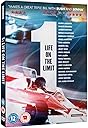

One
Product ID: 48143582
Details
- GenreDocumentaries
- FormatPAL
- ContributorMichael Nigel
- Runtime1 hour and 49
- ColourColour
Desertcart purchases this item on your behalf and handles shipping, customs, and support to Bermuda.
Narrated by Michael Fassbender, 1: Life on the Limit is an action documentary that evokes the glamour, speed, danger and excitement of the golden age of Formula 1. In an era when the sport was terrifyingly dangerous, the drivers were revered as rock stars with charisma and raw talent, however many of them paid the ultimate price. Those who survived racing at this time became leaders, standing up to save lives in a sport that was stealing them at a tragic rate. Using rare and archival footage, 1: Life on the Limit features the largest list of F1 interviewees ever assembled. Review: The moment of impact - After cramming a dozen of the most hoary, hackneyed cliches into its first sixty seconds, I thought uh-oh, here we go. After F1 received the Fisher Price treatment in RUSH, a film which did the sport no real justice at all, it's amateur hour again. Stand by for a 90-minute Sky Sports style montage: fast cars, girls, loud noises, blah blah.. All fast edits, flash camerawork, no authenticity, no substance. But I was wrong. After the pomp and circumstance of the first minute, '1' slams to a halt, literally, as Martin Brundle's car rises and violently jackknifes through the air and into the Armco at Adelaide '96. Silence .. Surely he's got to be dead. But F1 fans know he's not. In a perfect scene-setting moment, Brundle's familiar voice cuts through the air, tells us he shouldn't be alive today, and we have our context. And then we're launched back in time, into what turns out to be a journey through F1's horrific middle years, and how a passionate group of drivers and team owners struggled to reduce the death count in a sport which had all-too-often become - at its grisly height in the Seventies - the sporting equivalent of a snuff movie. Motorsport fans love a good crash, but when a driver is burnt to death, or virtually sliced in half, or decapitated - all of which happen in '1'- it ceases to be entertaining. The film teaches you how Stewart, Fittipaldi and Lauda played their roles in making the sport safer, and how Bernie Ecclestone of all people perhaps made, with his insistence that Prof Sid Watkins (may he rest in peace) rule every race from a medical standpoint, the biggest contribution. Max Moseley, too. I hadn't appreciated all of this. Nor did I know that Rindt died when he insisted on removing his own rear wing to make the car go faster. Or how much of a superstar Cevert had become before that stomach-churning crash at Watkins Glen which made his fellow drivers cry with the horror. Or indeed many other things, and I am a life-long fan of F1 since 1977, the year of Tom Pryce and Kyalami, although that insane, terrible and unforgettable moment isn't featured in the film. '1' is wonderful. At times, if you're a hardcore, long-time fan, especially if you experienced the sport through the driver-killing Seventies like my brother Mark and I did, it might put a few tears in your eyes. It gets compared to SENNA, which is a seminal documentary in any genre, never mind sports documentaries. But I'm not comparing the two. '1' has its place, and in my view it joins SENNA as the second great F1 film in recent years. It doesn't go for controversy, although there is naturally some finger-pointing. If you're a circuit-owner from the 1970s, or a relative of Colin Chapman, you might not like what you see here. Jacky Ickx, too, is singled out as a reckless Neanderthal who ignored safety and went against the rest - although Ickx magnificently defends his case in a relaxed, rather charming interview, without appearing too self-satisfied. In fact, Ickx's charismatic and likeable turn is suffused with the glow of a man who walked the tightrope blindfold, and didn't fall. The predominant vibe from the interviewees who were around when the others were dying so often ... Fittipaldi, Andretti, Ickx, Stewart, Surtees, and of course Lauda ... is that they are The Survivors. As Andretti says, he dodged the bullet. That the bullets found so many of the greatest drivers who ever lived, is what gives '1' it's constant air of tragedy. There is dread when a driver, such as Clark, Cevert or Rindt, receives the in-depth treatment, in the knowledge that the film makers are simply giving us the measure of men who, ultimately, would die horribly at the wheel of their car. Some may find '1' ghoulish. I found it a fitting memorial to men both living and dead who are among my sporting heroes of all time. A world-class line-up of interviewees, more or less everybody you'd want to hear from (except, perhaps, Prost), filmed and edited tastefully. Nobody outstays their welcome. It's a brisk film punctuated by invigorating music and the ear-shattering, primal noises of an F1 circuit. And yes, it sounds amazing on your home cinema. The men who play their parts in the relative sanitisation of the modern-day sport are reduced to a few interviews early and late in the movie, but although that very sanitisation is clearly where '1' is headed, it also knows that that's not where the story or the entertainment truly lie. Kudos to the film makers for not producing an F1 retrospective for the YouTube generation. But, briefly, you're brought to the near-present day by a genius quip from the quick-witted Robert Kubica, near the end. Cue much laughter. It's a film for me and my big brother, as we were there back in the day. Monza 1977, the year before Sid Watkins arrived, and Petersen died, we sat in that big long old stand among the Tifosi, and watched Andretti beat the six-wheel Tyrrells. We - like a million other men of a certain age - remember those days, obsessively following a dangerous sport in which anything could happen, and which has now become relatively predictable, sanitised and desperately, almost calamitously, commercial. Maybe death is entertainment, after all. Perhaps that's what we all have to recognise. The Romans had their gladiators, and we had ours. But the Formula One gladiators who died, all died doing something they loved - right up to the moment of impact, the sport to which they had devoted their lives quickly and brutally sending them on their journey into the next one. Review: Beautifully done - Really enjoyed this - I’m pretty new to the F1 scene and I’d watched Rush and loved it, this was a great follow up to show how the industry changed and how incredibly dangerous it used to be - some scenes were a little upsetting but the archive footage was incredible and there are interviews with some brilliant drivers and industry experts. Well worth a watch - I bought it for my partner who’s obsessed with F1 and he absolutely loved it.
| Contributor | Michael Shevloff, Nigel Sinclair, Paul Crowder |
| Customer Reviews | 4.7 out of 5 stars 804 Reviews |
| Format | PAL |
| Genre | Documentaries & Biographies |
| Global Trade Identification Number | 05055201826213 |
| Manufacturer | Studiocanal |
| Number of discs | 1 |
| Runtime | 1 hour and 49 minutes |
A**N
The moment of impact
After cramming a dozen of the most hoary, hackneyed cliches into its first sixty seconds, I thought uh-oh, here we go. After F1 received the Fisher Price treatment in RUSH, a film which did the sport no real justice at all, it's amateur hour again. Stand by for a 90-minute Sky Sports style montage: fast cars, girls, loud noises, blah blah.. All fast edits, flash camerawork, no authenticity, no substance. But I was wrong. After the pomp and circumstance of the first minute, '1' slams to a halt, literally, as Martin Brundle's car rises and violently jackknifes through the air and into the Armco at Adelaide '96. Silence .. Surely he's got to be dead. But F1 fans know he's not. In a perfect scene-setting moment, Brundle's familiar voice cuts through the air, tells us he shouldn't be alive today, and we have our context. And then we're launched back in time, into what turns out to be a journey through F1's horrific middle years, and how a passionate group of drivers and team owners struggled to reduce the death count in a sport which had all-too-often become - at its grisly height in the Seventies - the sporting equivalent of a snuff movie. Motorsport fans love a good crash, but when a driver is burnt to death, or virtually sliced in half, or decapitated - all of which happen in '1'- it ceases to be entertaining. The film teaches you how Stewart, Fittipaldi and Lauda played their roles in making the sport safer, and how Bernie Ecclestone of all people perhaps made, with his insistence that Prof Sid Watkins (may he rest in peace) rule every race from a medical standpoint, the biggest contribution. Max Moseley, too. I hadn't appreciated all of this. Nor did I know that Rindt died when he insisted on removing his own rear wing to make the car go faster. Or how much of a superstar Cevert had become before that stomach-churning crash at Watkins Glen which made his fellow drivers cry with the horror. Or indeed many other things, and I am a life-long fan of F1 since 1977, the year of Tom Pryce and Kyalami, although that insane, terrible and unforgettable moment isn't featured in the film. '1' is wonderful. At times, if you're a hardcore, long-time fan, especially if you experienced the sport through the driver-killing Seventies like my brother Mark and I did, it might put a few tears in your eyes. It gets compared to SENNA, which is a seminal documentary in any genre, never mind sports documentaries. But I'm not comparing the two. '1' has its place, and in my view it joins SENNA as the second great F1 film in recent years. It doesn't go for controversy, although there is naturally some finger-pointing. If you're a circuit-owner from the 1970s, or a relative of Colin Chapman, you might not like what you see here. Jacky Ickx, too, is singled out as a reckless Neanderthal who ignored safety and went against the rest - although Ickx magnificently defends his case in a relaxed, rather charming interview, without appearing too self-satisfied. In fact, Ickx's charismatic and likeable turn is suffused with the glow of a man who walked the tightrope blindfold, and didn't fall. The predominant vibe from the interviewees who were around when the others were dying so often ... Fittipaldi, Andretti, Ickx, Stewart, Surtees, and of course Lauda ... is that they are The Survivors. As Andretti says, he dodged the bullet. That the bullets found so many of the greatest drivers who ever lived, is what gives '1' it's constant air of tragedy. There is dread when a driver, such as Clark, Cevert or Rindt, receives the in-depth treatment, in the knowledge that the film makers are simply giving us the measure of men who, ultimately, would die horribly at the wheel of their car. Some may find '1' ghoulish. I found it a fitting memorial to men both living and dead who are among my sporting heroes of all time. A world-class line-up of interviewees, more or less everybody you'd want to hear from (except, perhaps, Prost), filmed and edited tastefully. Nobody outstays their welcome. It's a brisk film punctuated by invigorating music and the ear-shattering, primal noises of an F1 circuit. And yes, it sounds amazing on your home cinema. The men who play their parts in the relative sanitisation of the modern-day sport are reduced to a few interviews early and late in the movie, but although that very sanitisation is clearly where '1' is headed, it also knows that that's not where the story or the entertainment truly lie. Kudos to the film makers for not producing an F1 retrospective for the YouTube generation. But, briefly, you're brought to the near-present day by a genius quip from the quick-witted Robert Kubica, near the end. Cue much laughter. It's a film for me and my big brother, as we were there back in the day. Monza 1977, the year before Sid Watkins arrived, and Petersen died, we sat in that big long old stand among the Tifosi, and watched Andretti beat the six-wheel Tyrrells. We - like a million other men of a certain age - remember those days, obsessively following a dangerous sport in which anything could happen, and which has now become relatively predictable, sanitised and desperately, almost calamitously, commercial. Maybe death is entertainment, after all. Perhaps that's what we all have to recognise. The Romans had their gladiators, and we had ours. But the Formula One gladiators who died, all died doing something they loved - right up to the moment of impact, the sport to which they had devoted their lives quickly and brutally sending them on their journey into the next one.
C**Y
Beautifully done
Really enjoyed this - I’m pretty new to the F1 scene and I’d watched Rush and loved it, this was a great follow up to show how the industry changed and how incredibly dangerous it used to be - some scenes were a little upsetting but the archive footage was incredible and there are interviews with some brilliant drivers and industry experts. Well worth a watch - I bought it for my partner who’s obsessed with F1 and he absolutely loved it.
P**Y
Superbly Edited
Nothing for ages and then three in a row - Senna, Rush and now Life on the Limit. The first two had a strong hi Human narrative whereas Life on the Limit is more of a dip into the Formula 1 archive. So it takes its main narrative as the development of safety in F1 to the point where we about to reach the 20th anniversary of the last death in Formula 1, Aryton Senna at Imola in May 1994, although the appearance of Michael Schumacher as a talking head is a reminder of the dangers faced by drivers looking for their thrills outside of the cockpit. Equally, featuring the late Professor Sid Watkins, the medical guru who was a fixture at race circuits, and who did much to improve safety, provides another poignant movement, tears on his cheeks as he ponders whether he could have done more to prevent his friend Senna racing that fateful day. The catalogue of deaths is dealt with in detail dwelling on Bandini, Cevert, Clark, Rindt and Williamson (the scene of hopelessness as David Purley tried to right the burning March, the driver trapped inside) whilst other drivers race on is damming testament to F1 attitudes in the 70s). It makes parts of the film difficult to watch. A 111 minute running time means much has to be missed out and the current era is addressed in a cursory way. For some a favourite driver is ignored - there is little on Moss, Hakkinen, Prost, Gilles Villeneuve or Vettel - and with this in mind the re-run of the Rush story can be seen either as duplication or an inspired link to that film. A great soundtrack, some fantastic editing but rather flat commentary from Michael Fassbender. Overall though a good film and hopefully one that unlocks more of the footage that is held by Bernie Ecclestone's team at Biggin Hill. Releasing some of Murray Walker's classic commentaries would be a welcome start
C**L
Great DVD demonstrates just how far the sport has come and also the dedication of the drivers and their desire to drive.
This is a great DVD and really demonstrates how the sport has developed in terms of safety over the years and the key people who contributed towards the turnaround, it also shows the sheer determination of the drivers and their passion to race even if they have been somersaulted through the air. Martin Brundles is a great example of this. A terrifying accident in Australia would have made most people want to lie down but we see Brundle running down the pit lane to dive in the Spare car to make the race restart.
S**N
One
l will buy again from you
J**V
How to save GP drivers from themselves.
In recent years, there have been several films about racing, Senna, Closer to the Edge and most recently, Rush. These films all have one thing in common, they're about the personality of the Driver or Rider, not the Car or Bike. This is very different, This film is about how technology, and the rules of F1 have changed, meaning that the drivers no longer have a 7:1 chance of surviving a Grand Prix season. At its worse, F1 killed a driver once per month. A driver hasn't died in over 12 years. Ayrton Senna was the last fatality in F1, despite the number of incidents being virtually the same as in the 70's and 80's. This film mainly consists of interviews with the drivers, crew and team owners who were there at the time. It also has quite a lot of footage of races and crashes, including scenes where drivers were either injured or died. I actually remember some of the races and crashes being shown on TV. But I've been a fan since the early 70's. The last season covered by this film is the 2012 season. So there is nothing about the change in rules governing the new nose hight (supposed to reduce to risk of cars being thrown up in the air when the nose touches the rear tyre of the car in front.) But plenty about how the drivers sat on fuel tanks, or didn't wear seatbelts because they thought it was safer to be thrown clear of the car in an accident. So, if you're a fan of a driver or team, with little or no interest in the history of F1, you probably won't enjoy this film too much, On the other hand, if you're a fan of F1 itself, then you'll probably find this film fascinating.
M**B
Excellent
The best F1 documentary I've seen: very good photographic quality, material I had not seen before, great interviews including some of the all time greats who had a massive influence on F1 (Sir Jackie Stewart among them), interesting F1 history and modern perspective. I wish it had been much longer so that it could use more of the material that the careful research had "found". In my opinion, a very intelligent production.
K**6
Excellent Doc! Though no subtitles.
Awesome documentary. I can’t imagine any motorsport fan not liking this. As much a must for F1 fans as for those who like to see how we’ve advanced technology and safety measures over the ages. A little surprised to find it didn’t contain subtitles, so if that’s a deal breaker for some then you may want to bear that in mind.
I**E
Excelente servicio
El blue ray llego en tiempo y forma
ね**1
秘蔵映像を交えた、命をかけた戦いをした伝説のレーサーたち
モータースポーツに命をかけて挑戦した伝説のレーサーたちの、秘蔵映像を交えたドキュメンタリーです。
J**N
Un amante de la F1 no se lo puede perder.
Un buen documental. Muy buenas imagenes y entrevistas. No es obligatorio tenerlo, pero sin duda si que es "obligatorio" verlo.
F**.
Incalzante
Documentario (o documento?) veramente incalzante, che lascia lo spettatore col fiato sospeso dall'inizio alla fine, come se si trattasse di un film d'azione. Filo conduttore imperniato sulla ricerca della sicurezza in Formula 1, dai tempi cosiddetti eroici, quando ogni anno morivano numerosi piloti, fino a quelli odierni dove la sicurezza è un dogma ormai consolidato. Indubbiamente è un film anglofilo e noi Italiani ce ne dobbiamo fare una ragione, ma nel contempo riesce ad essere piuttosto obiettivo. Tuttavia la razionalità anglosassone non impedisce di farci vivere momenti di autentico pathos e di commozione. Qualche inesattezza (Rindt non era tedesco, ma austriaco, per esempio) o qualche luogo comune su noi Italiani non tolgono nulla alla spettacolarità del film, con interviste, riflessioni e filmati inediti che lo rendono un vero must imperdibile.
B**E
Great movie
I thought this documentary was well executed. I really enjoyed the rare footage from the past. My only issue is that it dismisses the 1980's (most notably Gilles Villeneuve) by only giving a brief mention. It's definitely a movie I'd sit down to watch again and again over the years.
Trustpilot
3 weeks ago
1 month ago