The Art of Hojo Undo: Power Training for Traditional Karate
Product ID: 5219785
Buy anything from 5,000+ international stores. One checkout price. No surprise fees. Join 2M+ shoppers on Desertcart.
Desertcart purchases this item on your behalf and handles shipping, customs, and support to Bermuda.
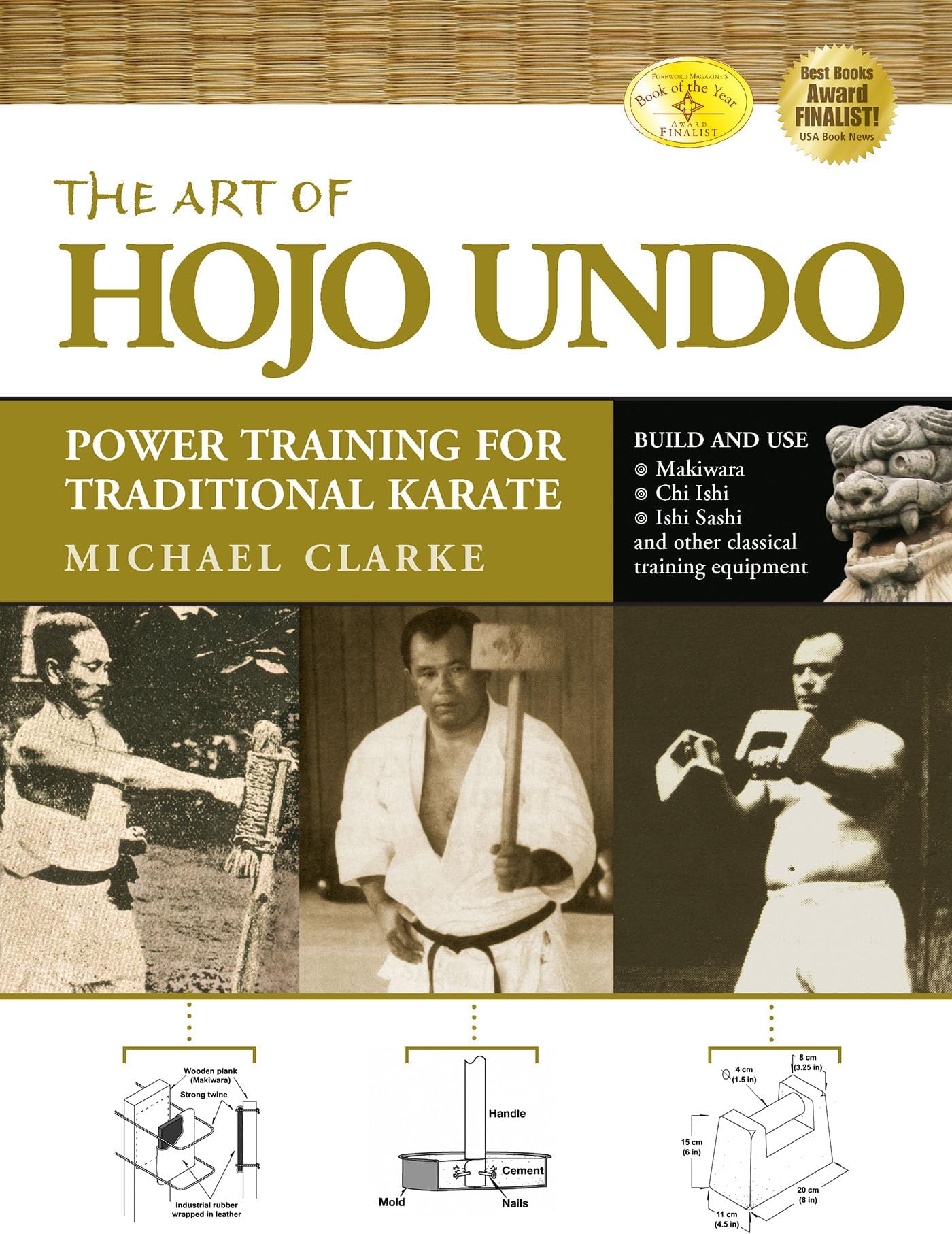
ADDING POWER TO THE FIGHTING TECHNIQUES OF KARATE Hojo Undo means 'supplementary training', and using these tools is the key for developing the devastating power of karate techniques. Without Hojo Undo, a practitioner cannot reach the profound strength levels required for a lifetime of karate training. This book details how to construct and use many training tools; provides accurate mechanical drawings, comprehensive training methods, and an historical context to understand why Hojo Undo was created in 'old' Okinawa. Warm up exercises Detailed construction drawings Build your own Hojo Undo tools! Learn how to use the tools to develop devastating power Link your increased power to fighting techniques Hear what Okinawan Masters say about Hojo Undo training Review: Not JUST for karate and kung fu... - I do Sin Moo Hapkido, and still incorporate Hojo Undo into it! I basically augment my Hapkido with karate/Chinese Iron Palm based breaking skills, which includes not only the repetitive impact-exposure training to toughen the human body for damage imperium and breaking ability, but also the kind of raw strength that is nightmare fuel for one's foes during that (hopefully) one in a million unavoidable street encounter with John Q Mugger. So, in combination with the methods set forth by Sensei Mike Reeves in his Paladin Press books "Ultimate Combat Conditioning for the street Warrior" and "Power Breaking," plus another book called "Iron Power Palm," the additional litany of training tools & methods in this book "Hojo Undo" all provide me with everything I need to become the ominous black monolith of combative immovability before mine enemies when/where they may one day present themselves. Thankfully such an encounter hasn't happened in my civilian life yet (I'm former U.S Army, with an Iraq deployment to speak of). But I'd rather be a trained slaughterer of my (or my girlfriend's) future assistants than be a dangerously naive untrained liability of wimpiness and un-manly woe, cowering on my knees as some waste of human tissue proceeds to have his way with the love of my life. But, this book and the highly effective methods in it; I even 1-up'd it's design for the makiwara by further researching and then incorporating a traditionally handmade punching pad made of bound manilla rope affixed to the standing plank, oldschool style. THE POINT HERE: Any martial arts, modern or ancient, can benefit from the inclusion of such training methods as those encompassed in Hojo Undo. My advice is to get this book, study it thoroughly, follow its instructions and train with what some others who "just don't get it" might even consider obsessivey high levels of commitment-based effort. You won't be disappointed. More than that - not only will those who may be counting on you for their safety during a night out with friends be glad you do when ol' Joe Shmoe street thug comes a callin,' but Mr Thug himself will be left seriously reconsidering his poor life choices while he's laying on the sidewalk with every bone in his hand & arm (and maybe half his rib cage for that matter) in more pieces than before he mosied on up to with hostile intent. Thank you. Review: A must for the true martial artist - I like to think of myself as a traditional martial artist. Not for the style I study, the look of the dojo, or my gi but for my mentality of the arts, and what they mean, and how to train. This book is written by such a martial artist and is a great resource for anyone looking to incorporate a 'strength training' regimen into their dojo, or just their own personal training. The book contains a good amount of history of the training methods and tools and more than adequate description/illustrations of how to construct such tools and use them in a safe manner. One great part is that this book will provide a great jumping off point for the martial artist to then go out and seek more exercises using such tools and to come up with your own based on your kata, sparring drills or whatever you have in your bag of knowledge. I have brought several chi ishi into my dojo as well as constructed a makiwara from a tire and some plywood and a store bought makiwara to hang on a wall. I use it on a regular basis as do our students and it has already proven beneficial in the short time they have begun their hojo undo training. I highly recommend this book for anyone looking for a little bit more out of their own martial arts training regardless of what style you study.


| Best Sellers Rank | #745,457 in Books ( See Top 100 in Books ) #374 in Safety & First Aid (Books) #1,002 in Sports Training (Books) #1,370 in Martial Arts (Books) |
| Customer Reviews | 4.8 out of 5 stars 316 Reviews |
K**S
Not JUST for karate and kung fu...
I do Sin Moo Hapkido, and still incorporate Hojo Undo into it! I basically augment my Hapkido with karate/Chinese Iron Palm based breaking skills, which includes not only the repetitive impact-exposure training to toughen the human body for damage imperium and breaking ability, but also the kind of raw strength that is nightmare fuel for one's foes during that (hopefully) one in a million unavoidable street encounter with John Q Mugger. So, in combination with the methods set forth by Sensei Mike Reeves in his Paladin Press books "Ultimate Combat Conditioning for the street Warrior" and "Power Breaking," plus another book called "Iron Power Palm," the additional litany of training tools & methods in this book "Hojo Undo" all provide me with everything I need to become the ominous black monolith of combative immovability before mine enemies when/where they may one day present themselves. Thankfully such an encounter hasn't happened in my civilian life yet (I'm former U.S Army, with an Iraq deployment to speak of). But I'd rather be a trained slaughterer of my (or my girlfriend's) future assistants than be a dangerously naive untrained liability of wimpiness and un-manly woe, cowering on my knees as some waste of human tissue proceeds to have his way with the love of my life. But, this book and the highly effective methods in it; I even 1-up'd it's design for the makiwara by further researching and then incorporating a traditionally handmade punching pad made of bound manilla rope affixed to the standing plank, oldschool style. THE POINT HERE: Any martial arts, modern or ancient, can benefit from the inclusion of such training methods as those encompassed in Hojo Undo. My advice is to get this book, study it thoroughly, follow its instructions and train with what some others who "just don't get it" might even consider obsessivey high levels of commitment-based effort. You won't be disappointed. More than that - not only will those who may be counting on you for their safety during a night out with friends be glad you do when ol' Joe Shmoe street thug comes a callin,' but Mr Thug himself will be left seriously reconsidering his poor life choices while he's laying on the sidewalk with every bone in his hand & arm (and maybe half his rib cage for that matter) in more pieces than before he mosied on up to with hostile intent. Thank you.
M**M
A must for the true martial artist
I like to think of myself as a traditional martial artist. Not for the style I study, the look of the dojo, or my gi but for my mentality of the arts, and what they mean, and how to train. This book is written by such a martial artist and is a great resource for anyone looking to incorporate a 'strength training' regimen into their dojo, or just their own personal training. The book contains a good amount of history of the training methods and tools and more than adequate description/illustrations of how to construct such tools and use them in a safe manner. One great part is that this book will provide a great jumping off point for the martial artist to then go out and seek more exercises using such tools and to come up with your own based on your kata, sparring drills or whatever you have in your bag of knowledge. I have brought several chi ishi into my dojo as well as constructed a makiwara from a tire and some plywood and a store bought makiwara to hang on a wall. I use it on a regular basis as do our students and it has already proven beneficial in the short time they have begun their hojo undo training. I highly recommend this book for anyone looking for a little bit more out of their own martial arts training regardless of what style you study.
R**N
great
A fantastic book. I reference this book regularly.
E**O
Great book
If you already have a background in Karate or Kobudo this would be a great adhesion either for broad your knowledge on traditional karate or as a piece of basic instruction on how to carry out some basic training. Although this not replace a human instructor, the author provides a very clear guide on how to produce and to use certain tools for enhancing your conditioning training. I will not recommend for beginners who require basic training, but if you are already familiar with the basics, this would be an excellent investment to enhance martial arts training.
K**R
Traditions
Loved this book, great insights into developing power with karate specific exercises. Author shows great insight by not only explaining exercises, but emphasizing breathing as well. So many books are pumped out and the most important aspects of harmony in mind, body, and spirit are so often left out. NOT here! Highly recommend to anyone interested in traditional karate training and techniques. You will absolutely see an improvement in power both in kata and kumite. Perfect blend of history and training lessons. I am training in Matsubayash Shorin Ryu since 1980 "old school" style training and am grateful for some new drills, and reviving some old ones. Thank you.
D**X
Classical tools for the Karateka
Good book. It is easy to read and understand. It also has many useful photos, helpful illustrations and interesting facts & stories. If your looking for a book on how to strengthen and unite your body, mind and breath, this is it. This book is not about breaking things. It about making tools and using tools or a partner to become a better prepared Karateka. I have studied Karate & other Martians arts and also taught in The U.S. & Japan. I think it's a good book (I never give 5 stars, nothing is perfect). I recommend reading this book.
C**.
Fantastic! Authentic! Accurate!
I'm living in Okinawa and have been taking karate lessons from a Uechi Ryu Karate dojo for the last 3 years. My Sensei speaks passable English, but much is lost in translation. This book has helped me fill in the gaps between what I think I am being taught and what I am actually being taught when stretching and excising. My dojo uses the same tools and techniques as described in this book. I'm impressed with the quality and accuracy of this book and feel like it was a bargain because of the knowledge I gained.
T**Y
Excellent Book
I bought this book out of interest for learning Hojo Undo. This book provides detailed drawings which are easy to follow and learn from. These are great exercises which I can’t wait to practice. Highly recommend this book.
Q**N
Clarke knows his stuff
This is so cool! The non-equiment stuff helped me with form. BUT the guides on how to make the equipment are phenomenal. He explains (more or less) the traditional methods of making it, and how to realistically make it in the modern day. Truly a must for any Karateka.
P**A
Indispensable
Es un libro de consulta sobre herramientas y métodos de entrenamiento para las artes marcialeles. Muy completo.
G**U
Addressed to the conscientious martial artist.
A great book, targeting all Martial Arts practitioners, as opposed to athletes of Sports Karate (or any other discipline of combat sports). Full of little gems for the conscientious martial artist, not only of Okinawan (as opposed to Japanese) Karate, but for Taekwon-Do (with a hyphen, despite MSWord objections) as well. Indeed, the second volume of Choi Hong Hi’s “Encyclopedia of Taekwon-Do”. Mississauga, ITF, 1983, vol. II, pp. 186-284, chapter “Training Aids”, offers an equally comprehensive account of potential “Hojo undo or supplementary training” some 40 years earlier. Still, an extremely useful book.
P**E
an excellent book
I was looking for exercises to strengthen my hands after an injury, and found this excellent book about power training, but from the martial arts point of view. The exercises shown here are more than just power training, but also train the karate stances, the karateka's stamina, and in the end, will even challenge one's mind and spirit. The tools are divided in two categories : lifting tools and impact tools. They speak for themselves. Michael Clarke also added a section of warming up exercises and additional parts for body conditioning (with one uke) and auxiliary exercices (like push ups...) Huge added value : Michael Clarke gives construction notes for each training tool mentioned in his book (always reminding that originally, these are everyday life objects used for training), so that you don't have to fly to Okinawa to have a chance to try them. I think it's also worth mentioning the numerous photographs from grand Masters' private collections, which transmit a heritage of the tradition of Hojo Undo. The Art of Hojo Undo is an essential book for every karate practitioner who wish to have a glance at the "old ways" of training and try them. It is also an essential book in any martial arts library, since to my knowledge, it is the only one gathering so much information about this subject, which tends to disappear and be replaced by power training in gyms.
A**E
Maravilhoso
Muito bom livro,indicado para todos os sensei's ,oss.
Trustpilot
3 weeks ago
1 month ago