We remain fully operational. Our teams are working around the clock to ensure your deliveries continue safely.

DOWNLOAD THE APP


Copyright © 2025 Desertcart Holdings Limited
DOWNLOAD THE APP
Buy anything from 5,000+ international stores. One checkout price. No surprise fees. Join 2M+ shoppers on Desertcart.
Desertcart purchases this item on your behalf and handles shipping, customs, and support to Bermuda.
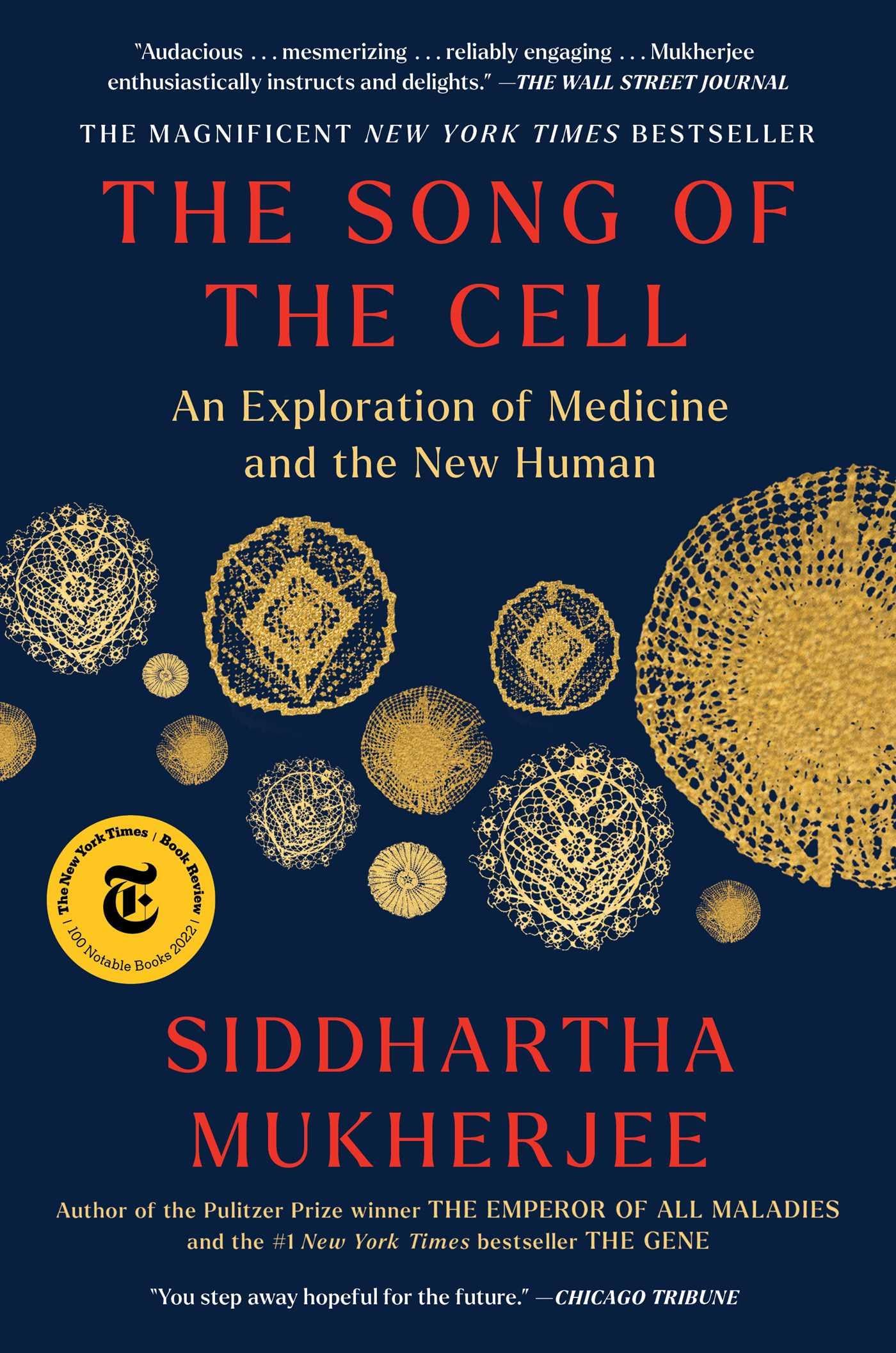
Buy The Song of the Cell: An Exploration of Medicine and the New Human on desertcart.com ✓ FREE SHIPPING on qualified orders Review: A Symphony of Science, History, and Personal Narrative - In a landscape saturated with scientific literature that often feels inaccessible to the layperson, "The Song of the Cell: An Exploration of Medicine and the New Human" stands out as a beacon of clarity and engagement. This book is not just for the scientifically inclined; it's a compelling read that draws in a diverse audience, including those who may not typically gravitate toward science. One of the book's most striking features is its ability to engage readers who are not science-oriented. The author employs a storytelling approach, using analogies, vivid descriptions, and relatable examples to explain complex scientific concepts. You don't need a background in biology or medicine to appreciate the groundbreaking developments discussed in this book; the author ensures that the material is accessible and, more importantly, fascinating for all. The book serves as a gateway into the world of new developments in medicine, from editing T cells to personalized treatments. It's not just a snapshot of where we are now; it's a narrative that pulls you into a future where medicine could be radically different and far more effective than what we've known. The excitement of what's possible is palpable on every page, making you eager to see these advancements come to fruition. As someone who enjoys history, I particularly appreciated the book's historical perspective on medicine. The author takes us on a journey through time, exploring how our understanding of medicine has evolved and how past discoveries have paved the way for today's innovations. This historical lens adds depth to the narrative and provides a fuller understanding of how far we've come—and how far we still have to go. What sets this book apart from others in the genre is the way the author weaves in personal experiences. Whether it's a family history of a particular illness or firsthand accounts of working in a lab, these personal touches make the narrative more relatable and engaging. It's not just a book about science; it's a book about people, making it all the more compelling. Overall, "The Song of the Cell: An Exploration of Medicine and the New Human" is a masterful blend of science, history, and personal narrative. It's a book that will not only educate you but also inspire a sense of wonder and optimism about the future of medicine. Whether you're a science enthusiast or a history buff, or even if you're neither, this book has something to offer you. Highly recommended for anyone looking to expand their understanding of what medicine has been, what it is, and what it could one day become. Review: Another great book by Siddhartha Mukherjee - Having already read “The Emperor of All Maladies” and “The Gene”, it was an easy decision to also read “The Song of the Cell”. Oddly, the desertcart “Product Details” refers to this book as “History of Biology & Nature”, “Medical History” and “Ancient Early Civilization History”. What a terrible and misleading description for this book. Certainly, this book, like the author’s previous two books, talks about some of hypotheses proposed by medieval scholars and about many of the experiments performed by past scientists and researchers. So, yes, the book includes some of the history of cell research (which I liked, by the way). But, more importantly, the author uses this history as a means to have the reader slowly gain a more and more complete and detailed understanding of the structure and behavior of the cellular world that makes up the human body. There are two major parts to the book (though several other aspects of the cell are also covered). The first part focuses on science’s developing knowledge of cell. What are the different parts that make up each cell? How do cells extract energy from the body so they can perform their basic function? How do cells eliminate waste given their double-walled structure? Many, many such questions are covered in this book. And, of course, there are still many more questions for which we do not yet have an answer. The second part of the book talks about the cooperative way that cells in specific organs can work together to accomplish that organ’s function. How do heart cells work together to make the heart act as a beating pump? How do the brain’s synapses function? Some of the other organs covered include bones (and bone growth), pancreas, liver, kidney and blood (and immune system). Unfortunately, my two-part description is sadly oversimplified. There is just so much diverse, interesting information in this book; and it is so well written. My review simply cannot do proper justice to the book itself. Some miscellaneous, unrelated thoughts that especially stuck with me. [ ] At one point, when describing one specific aspect of science’s increasing understanding of the cellular biology, the author pointed out that, although he wrote just a single paragraph on that aspect, it actually took scientists about two decades to arrive at their understanding. [ ] There are single-celled animals, but of course humans are an integration of a huge variety of specialized cells. The story of multi-celled biology is the development of these specialized cells. [ ] The portions of this book hardest for me to try and comprehend and absorb had to do with how cells actually function. The discussions on proteins and enzymes and peptides were a bit beyond me as organic chemistry is a subject I’ve never read about before. [ ] In this book, the author names many researchers. But he doesn’t just give their names. Typically, there is a brief comment on their physical appearance and personality as well. I viewed this as the author’s way of honoring those pioneers, peers and mentors who also have devoted their lives to the science of the cell. Bottom Line: “The Emperor of All Maladies” was an exceptional book. Still, both “The Gene” and this book, “The Song of the Cell”, are great reads, too.
| Best Sellers Rank | #51,279 in Books ( See Top 100 in Books ) #4 in Cell Biology (Books) #6 in History of Medicine (Books) #137 in History & Philosophy of Science (Books) |
| Customer Reviews | 4.7 out of 5 stars 3,025 Reviews |
Y**E
A Symphony of Science, History, and Personal Narrative
In a landscape saturated with scientific literature that often feels inaccessible to the layperson, "The Song of the Cell: An Exploration of Medicine and the New Human" stands out as a beacon of clarity and engagement. This book is not just for the scientifically inclined; it's a compelling read that draws in a diverse audience, including those who may not typically gravitate toward science. One of the book's most striking features is its ability to engage readers who are not science-oriented. The author employs a storytelling approach, using analogies, vivid descriptions, and relatable examples to explain complex scientific concepts. You don't need a background in biology or medicine to appreciate the groundbreaking developments discussed in this book; the author ensures that the material is accessible and, more importantly, fascinating for all. The book serves as a gateway into the world of new developments in medicine, from editing T cells to personalized treatments. It's not just a snapshot of where we are now; it's a narrative that pulls you into a future where medicine could be radically different and far more effective than what we've known. The excitement of what's possible is palpable on every page, making you eager to see these advancements come to fruition. As someone who enjoys history, I particularly appreciated the book's historical perspective on medicine. The author takes us on a journey through time, exploring how our understanding of medicine has evolved and how past discoveries have paved the way for today's innovations. This historical lens adds depth to the narrative and provides a fuller understanding of how far we've come—and how far we still have to go. What sets this book apart from others in the genre is the way the author weaves in personal experiences. Whether it's a family history of a particular illness or firsthand accounts of working in a lab, these personal touches make the narrative more relatable and engaging. It's not just a book about science; it's a book about people, making it all the more compelling. Overall, "The Song of the Cell: An Exploration of Medicine and the New Human" is a masterful blend of science, history, and personal narrative. It's a book that will not only educate you but also inspire a sense of wonder and optimism about the future of medicine. Whether you're a science enthusiast or a history buff, or even if you're neither, this book has something to offer you. Highly recommended for anyone looking to expand their understanding of what medicine has been, what it is, and what it could one day become.
F**R
Another great book by Siddhartha Mukherjee
Having already read “The Emperor of All Maladies” and “The Gene”, it was an easy decision to also read “The Song of the Cell”. Oddly, the Amazon “Product Details” refers to this book as “History of Biology & Nature”, “Medical History” and “Ancient Early Civilization History”. What a terrible and misleading description for this book. Certainly, this book, like the author’s previous two books, talks about some of hypotheses proposed by medieval scholars and about many of the experiments performed by past scientists and researchers. So, yes, the book includes some of the history of cell research (which I liked, by the way). But, more importantly, the author uses this history as a means to have the reader slowly gain a more and more complete and detailed understanding of the structure and behavior of the cellular world that makes up the human body. There are two major parts to the book (though several other aspects of the cell are also covered). The first part focuses on science’s developing knowledge of cell. What are the different parts that make up each cell? How do cells extract energy from the body so they can perform their basic function? How do cells eliminate waste given their double-walled structure? Many, many such questions are covered in this book. And, of course, there are still many more questions for which we do not yet have an answer. The second part of the book talks about the cooperative way that cells in specific organs can work together to accomplish that organ’s function. How do heart cells work together to make the heart act as a beating pump? How do the brain’s synapses function? Some of the other organs covered include bones (and bone growth), pancreas, liver, kidney and blood (and immune system). Unfortunately, my two-part description is sadly oversimplified. There is just so much diverse, interesting information in this book; and it is so well written. My review simply cannot do proper justice to the book itself. Some miscellaneous, unrelated thoughts that especially stuck with me. [ ] At one point, when describing one specific aspect of science’s increasing understanding of the cellular biology, the author pointed out that, although he wrote just a single paragraph on that aspect, it actually took scientists about two decades to arrive at their understanding. [ ] There are single-celled animals, but of course humans are an integration of a huge variety of specialized cells. The story of multi-celled biology is the development of these specialized cells. [ ] The portions of this book hardest for me to try and comprehend and absorb had to do with how cells actually function. The discussions on proteins and enzymes and peptides were a bit beyond me as organic chemistry is a subject I’ve never read about before. [ ] In this book, the author names many researchers. But he doesn’t just give their names. Typically, there is a brief comment on their physical appearance and personality as well. I viewed this as the author’s way of honoring those pioneers, peers and mentors who also have devoted their lives to the science of the cell. Bottom Line: “The Emperor of All Maladies” was an exceptional book. Still, both “The Gene” and this book, “The Song of the Cell”, are great reads, too.
M**8
Very interesting. Not perfect.
The author clearly has a command of the material, has a good story to tell and has plenty of anecdotes to illustrate his points. The only complaint is slightly tortured prose from occasionally over-explaining. Just a small nit. For one, am learning a ton. Dive in.
P**S
Awesome to the n
I remember my experience reading Dr. Mukherjee’s “Emperor of all Maladies”. It was an awesome read. This was even more so. After reading this (I can’t say finishing because the story goes on to meet the challenges of understanding the human body and developing treatments that respond to its awesome complexities), I am even more in awe of what nature has created, the wonder that is human existence. As just one of this species, I have a new appreciation for the miracle that inhabits me. This is also scary because I now realize how many things are going right for me to be alive and to have lived for 80 years. And yes, it heightens my sense of fragility, how easily things could go wrong and bring my life to an end, likely with the period of dysfunction and pain that others have experienced. I am not particularly religious but I I think I will be more thankful now for each additional day that I live. Awesome also describes Dr. Mukherjee’s skill in writing about this subject in a way that I feel I can somewhat understand what he is describing, a subject that is far beyond my expertise. He not only writes with great skill but also with an ability to get into the shoes, the limited understanding, of his readers. Yes, he inevitably uses difficult technical medical terms, but he explains each of these. And he gives lucid descriptions of the research and the researchers who made the discoveries, persisted through failures along the way. And yet more so, I appreciate the real patients who he describes caught in these discoveries with results that sometimes don’t lead to better lives and sometimes do. I recommend this book to anyone who has the curiosity to know what goes on inside of them.
S**E
You'll really have an appreciation for science and what our bodies can do.
I consider this one of the best books that I've read. As a non-science person, I was lead into the workings of the cell and our bodies in general by an expert who not only knows, but can make it riveting and amazing!
R**N
Son of the cell
Dr. Mukherjee writes with such clarity in all his books that it makes you want to learn more. The “Song of the Cell” provides a good historical overview of cell science then explores modern day issues where cellular research is helping to treat diseases and improve medical outcomes. His continuing exploration and lay explanation of cancer knowns and unknowns motivates the reader to look for more information on current treatments and findings as they relate to this challenging disease. The book is highly recommended if you want to learn more about the cell and cellular research as it applies to human disease.
L**S
Packed with Science and Personal Stories
The author, Siddhartha Mukherjee, when he finished the “Emperor of all Maladies” didn’t think he had another book in him. However, he followed up with a book called the “Gene” which had science, a history of science but also very personal revelations. And then the book “Song of the Cell” was published. Mukherjee has a very distinct style of combining hard science with history and personal stories that make his books on science very relatable. I can’t say that it is easy reading. The parts of the book that are science, not history not personal stories, read more like a textbook. There is so much information in this book as well as others that I could probably reread this book on multiple occasions and learn more. Or, you could consider just going back to a particular section to review that one subject. All this being said Mukherjee is a remarkable author, scientist, and oncologist. He is extremely thoughtful and looks at a scientific issue from almost every angle and perspective. This is quite uncommon and very helpful in having a full picture of not only the science, but how it applies to the human condition.
Y**L
We are stardust. We are golden.
Having read and enjoyed the authors past two books (The Emperor of all Maladies and The Gene), I eagerly awaited his most recent book, The Song of the Cell. The book doesn’t disappoint. For many of us who studied biology in high school, this book covers a lot of familiar terrain. But this isn’t a textbook. Mukherjee possesses a storyteller’s instinct, and the book moves forward propelled by a cast of characters straight out of a Dicken’s novel. Staring from the Dutch trader Leeuwenhoek peering into his crude microscope to examine the tiny organisms in drain water to the eccentric German physician Rudolf Virchow who’s free thinking led to the advancement of cellular medicine, the book is replete with amazing scientists whose curiosity and thirst for knowledge has made these wondrous breakthroughs in medicine possible. Reading this book, one realizes how much we take for granted. How complicated the human body is and how magical its operation. Also noteworthy are the thousands of unsung scientists who for years have toiled away (and continue to toil) on lab-benches to enable all the many discoveries that make our present lives so much easier. Culling stories from his personal and professional life, Mukherjee weaves his tale deftly while explaining complex concepts of cell biology with verve and clarity. The dude clearly loves his subject matter! My biggest quibble with this book is the lack of clear illustrations. There are some, but they are not particularly helpful. I still can’t figure out where the damn Gremlin cells are located – somewhere in the bones – can you? Towards the end of the book, Mukherjee touches on Homeostasis, the ability of the human body to reset itself to “factory settings”. This January 2023, the average temperature in New York City has been 10 degrees above normal. The warmest January on record. Our planet is running a fever, and alas mankind has screwed up the planet’s homeostatic functions. I hope for humanity’s sake, there are a band of motivated citizens who help us reset the planet’s systems back to its “factory settings”. Reading “The Song of the Cell” would be a good place to start!
Trustpilot
1 month ago
2 days ago